
We have in the past taken on maintenance of other firms’ installations, and besides the obvious problems of being stuck working with species ill suited to their locations (which costs the client due to anticipated replacement of particular plants, in some cases within weeks of their installation), one other thing sticks poignantly in my horticultural craw, which I feel the need to mention here: too often large scale plants are installed, where smaller ones would do perfectly well.
There is a lot of pressure from clients, their designers, etc. to really make a large impact right at the outset of a project. There is also the fact that the cost of plants tends to double when you go up a size (not that I’m suggesting that someone might be putting the bottom line before the success of a live plant installation; that never happens…). But in planning for long term success, a few things are, I think, worth keeping in mind.
Large stock is, by and large, grown in substantially more light than it would get in most interior applications. This light is generally overhead, and this dictates the type and direction of growth that the plant produces. This can cause immediate problems when these plants are sited where they receive light from the side and where in many cases the crown of the plant is itself above the top of a window frame, leaving most of the active growth areas of the plants in very deep shade, with the obvious outcome being dieback in these areas and a very ugly looking plant indeed. Further, because of the way the plant was grown a path to pruning the specimen to align better with both the shape of the space and the available light source is not always clear; it is a challenging to rebuild a framework in a branched tree such as Ficus without a long and frankly unsightly interval.
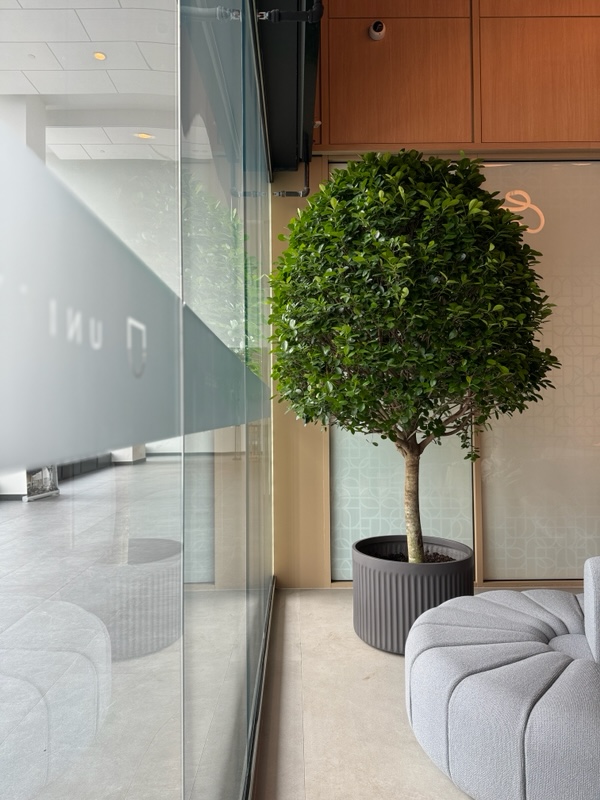
Starting with smaller stock, I believe, promotes permanence and greater dynamism/character in interior plant installations. More reasonable clients will understand that adding time as a component to an installation results in a much more well established interior landscape over the long term, and even in the short term newly installed specimens will show less shedding and thinning as they adapt their growth from dense, sun-grown branches to more the open style of plants adapted to the available light indoors. Working with smaller stock allows us to work with the character of the tree so that it can grow more naturally to fill the space; primary branches are not as established in an upright form and can be allowed to grow horizontally across window spaces, creating immense character and again, dynamism, as branches reach unlikely (and, to me, delightfully awkward) lengths that create real tension and visual interest in these interior spaces.
If you really want to gain some height in the early days of an installation, I might suggest simply using taller containers, provided they are suitable for the long term health of the species contained therein.
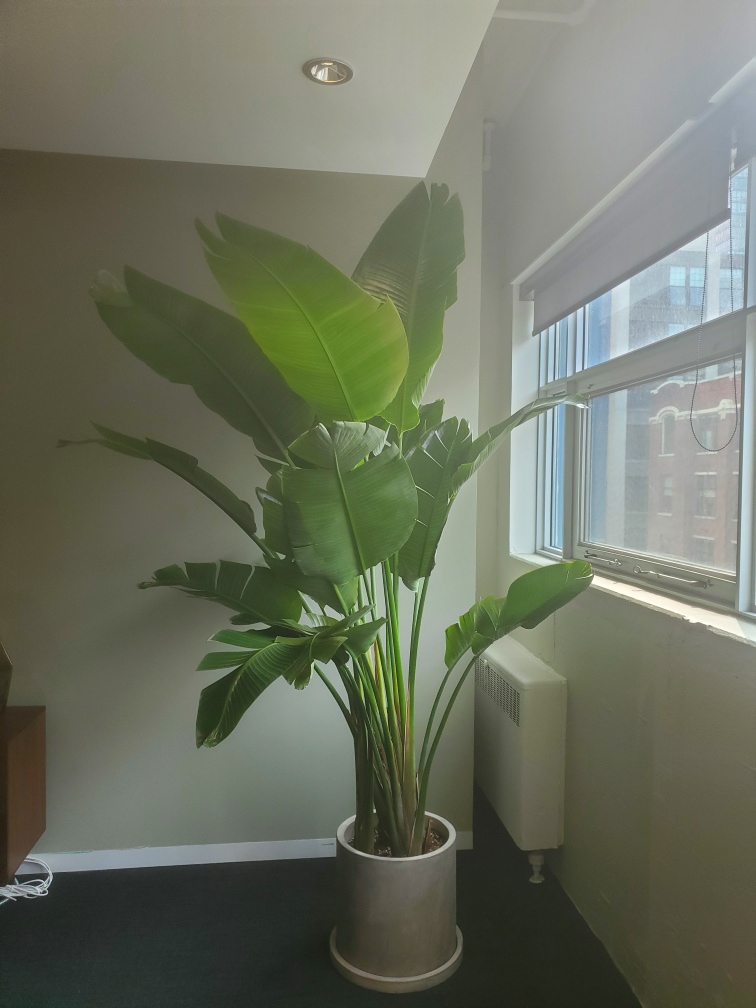
And as I will probably write more on this in future, I won’t start in here on the use of upright species that will outgrow the space as soon as they grow a new leaf (looking at you, Strelitzia nicolai [sorry about the crap photo; I was too mad to bother getting a good one]):
You may notice that I have thrown designers under the bus a little bit in the above, and frankly I stand by that: it needs to be realized that plants are not static pieces of furniture, and that they best complement interior spaces when they are healthy and growing well into the space; succeeding, and over the long term. I don’t think it’s going too far to say that our culture of instant gratification and of being inundated with visual media in which the long term success of a project is not documented creates this climate of wanting things to be finished as soon as they’re started. I can understand wanting to add a very finished-looking project to one’s portfolio, and I’d be the last person to disagree that large plant specimens are often breathtaking and wonderful additions to indoor spaces, but adding a healthy measure of time and patience into the mix helps us to create projects that are more evocative and allow us to feel more of what plants truly have to offer in these environments.